
Secure AI.
Under Your Control.
Deploy advanced AI across sensitive institutional data, systems, and workflows — without giving up control of your information or infrastructure.
Swipe diagram to explore
Public AI was not designed for sensitive institutions.
Data leaves your control.
Sensitive institutional, regulatory, proprietary, or national-security information cannot always be exposed to external public AI platforms.
Infrastructure creates dependency.
Critical AI capabilities should not rely entirely on one external cloud, model vendor, or foreign public AI API.
Governance becomes fragmented.
Identity, permissions, models, tools, policies, data, and auditability require one institutional control layer.
The problem is not access to AI.
The problem is control.
One request. Governed from data to decision.
Alliance Intelligence applies institutional identity, permissions, policy, model controls, and audit requirements before AI interacts with sensitive information.
- Regulatory ArchivePERMITTED
- Internal Policy LibraryPERMITTED
- Historical DecisionsPERMITTED
“Compare this proposed regulation against existing policy and historical institutional precedent. Identify conflicts, material risks, and relevant prior decisions.”
A governed request enters the control plane. Nothing reaches a model yet.
- Senior Regulatory Analyst · National Regulatory Authority
- Classification: Restricted
- Session established through institutional identity provider
- User
- S. Analyst (institutional identity)
- Role
- Senior Regulatory Analyst
- Dataset
- Regulatory Archive · Policy Library · Historical Decisions
- Policy
- Restricted — external model access denied
- Model
- Approved private/local model
- Tools
- Document retrieval · Policy comparison
- Timestamp
- 2026-08-18 09:14:02 UTC
- Action
- Regulatory conflict & precedent analysis
- Output status
- Draft — pending human review
Illustrative interface · Representative control flow, not a customer deployment
The control plane is the product.
Best available intelligence. Inside your rules.
Institutional Data & Systems
Alliance Intelligence Control Plane
Approved Models
Controlled Compute
Agents & Institutional Users
Any model or infrastructure vendor can change. The control plane remains stable.
Alliance Intelligence is not the model, the GPU, or the data center. It is the secure control and orchestration layer between them.
Module labels indicate maturity. Not every capability is production-ready today; scope is defined per deployment.
Compute is infrastructure. Control is the platform.
Private AI compute runs inside the institution's own perimeter. The control plane sits above it — governing identity, policy, routing, and audit regardless of whose hardware it runs on.
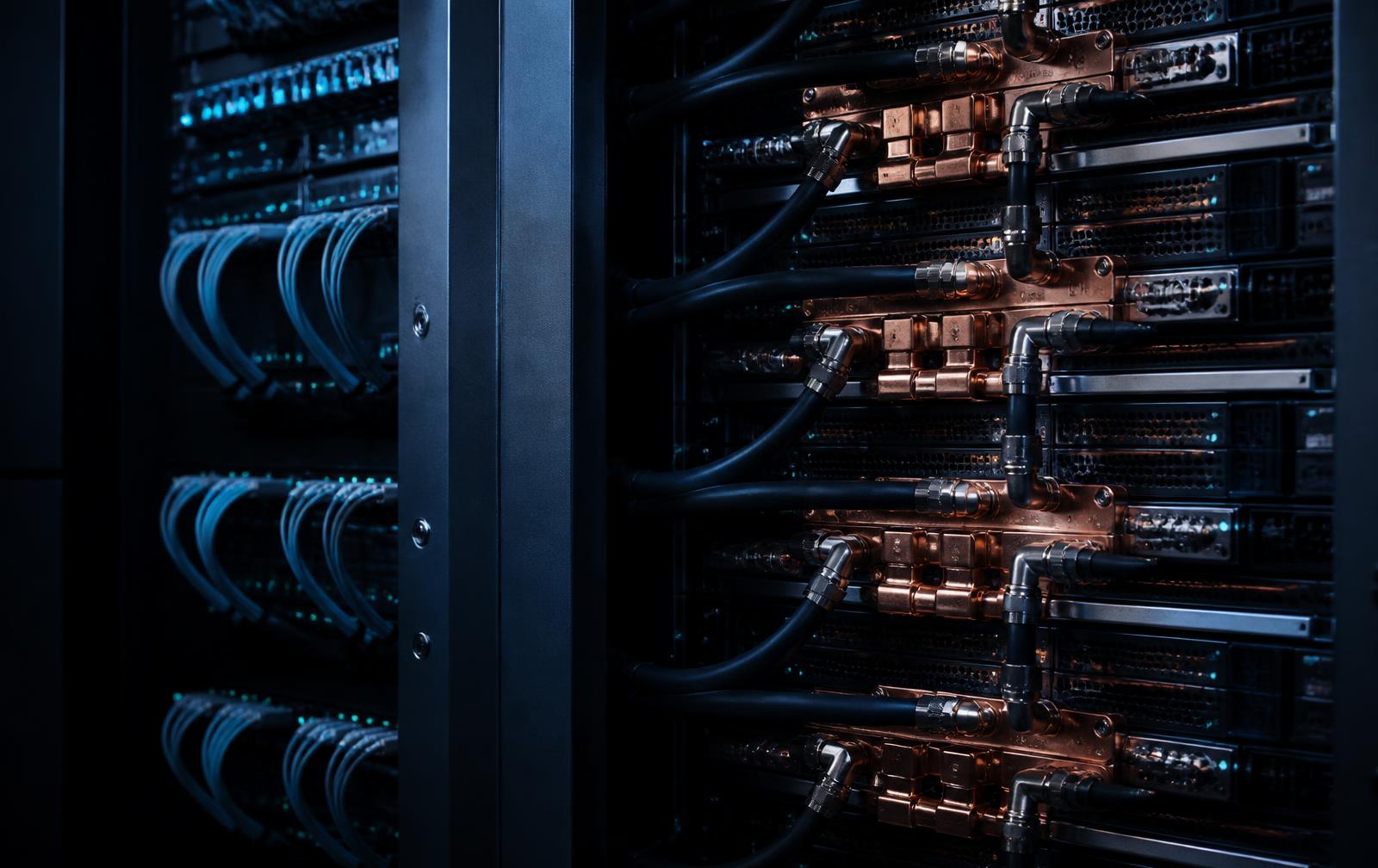
Private AI compute: GPU clusters, high-density racks, networking, liquid cooling, and power infrastructure — operated by the institution or its chosen partners.
Software governance sits above physical compute. Alliance Intelligence does not manufacture, own, or operate this hardware.
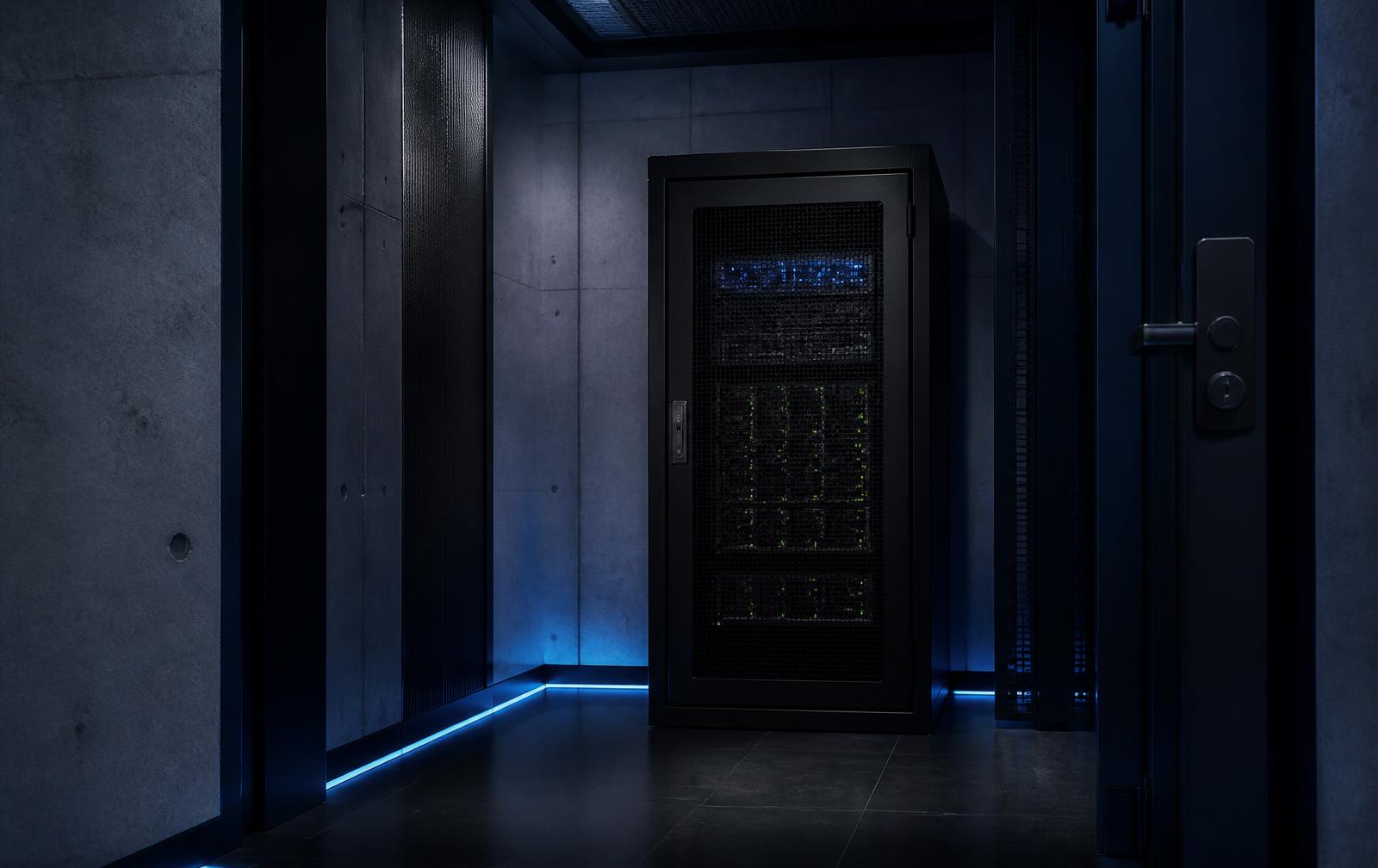 On-premise deployment
AI inside your own security perimeter.
Secure server rooms, compact GPU clusters, and enterprise AI appliances. Data, models, and inference stay where policy requires them to stay.
 Representative deployment architecture
Sovereign capacity without a hyperscale build.
Modular AI infrastructure lets institutions stand up governed capacity quickly and scale it later. Infrastructure is provisioned by customers, governments, or partners.
Control is the architecture, not the messaging.
Five security domains define how institutional data, models, agents, and users are governed inside a single control layer.
Identity & Access
- Role-based access control
- Enterprise identity integration
- User and service identities
- Authentication controls
Architecture principles and deployment options. Alliance Intelligence does not claim government certification, accreditation, or completed third-party security attestation. Specific controls are deployment dependent and defined with the institution.
Control without lock-in.
Models, clouds, GPUs, and infrastructure partners are replaceable components. The secure control layer is the constant.
Data Sovereignty
Control where institutional information resides, who accesses it, and which AI systems may process it.
Operational Sovereignty
Deploy AI without requiring dependence on a foreign public AI API or a single cloud environment.
Technological Sovereignty
Long-term control over compute, software, models, infrastructure, and national AI capability.
Alliance Intelligence focuses initially on Data Sovereignty and Operational Sovereignty. Complete Technological Sovereignty is a longer-term institutional or national objective and is not claimed as a current capability.
The customer controls the environment. Alliance Intelligence provides the secure AI control layer.
AI infrastructure where control requires it.
Alliance Intelligence can operate across customer-controlled, government-controlled, partner-provisioned, and sovereign compute environments — from compact institutional systems to large-scale AI infrastructure.

Compute is infrastructure. Control is the platform.
Representative deployment architecture
- Edge / Local
Compact AI Compute
- Institution
Private GPU Infrastructure
- Modular
Rapid-Deployment AI Infrastructure
- Data Center
High-Density AI Compute
- National
Sovereign AI Infrastructure
Alliance Intelligence does not manufacture GPUs or servers, and does not own or operate data centers. Physical infrastructure is a deployment layer; Alliance Intelligence is the secure AI control and orchestration layer above it.
Four institutional workflows, one controlled path from data to decision.
Each workflow follows the same discipline: sensitive institutional data stays inside the boundary, AI operates only where policy allows, and a human remains accountable for the outcome.
Regulatory Intelligence
Illustrative workflowAn analyst must evaluate a proposed regulation against existing law, internal policy, historical decisions, and institutional precedent — under time pressure and without leaking sensitive drafts.
- Draft regulations and internal legal memoranda
- Historical decisions and institutional precedent
- Sectoral policy archives (bounded scope)
- Identity and analyst role resolved before retrieval
- Dataset boundary restricted to authorized archives
- Policy engine blocks export of draft material
- Registry routes to a permitted model in the approved environment
- Structured comparison against law and internal policy
- Conflicts and risk surfaced with citations
Analyst validates conflicts, risk flags, and citations; the decision-maker retains final authority.
Prompt, retrieved sources, model, policy decisions, and reviewer action recorded as one traceable lineage.
- Time from request to reviewed draft assessment
- Share of conclusions traceable to an institutional source
- Policy conflicts detected before publication
Metrics define what a pilot would measure. They are not achieved results.
Illustrative workflows — not customer case studies. No customers, contracts, deployments, or performance results are represented here. Datasets and volumes describe the workflow pattern only.
A controlled decision process, not an AI transformation program.
Institutional AI adoption should begin with one sensitive workflow and one measurable result.
Discover + Secure
- Workflow baseline
- Data boundaries
- Security requirements
- Deployment architecture
- Success metrics
Deploy + Integrate
- Controlled environment
- Institutional connectors
- Model configuration
- Permissions
- Governance
- Initial workflow
Validate + Expand
- User testing
- Outcome measurement
- Security review
- Deployment assessment
- Production roadmap
After 90 days the institution should hold evidence to decide whether the workflow should:
Start with one workflow. Expand into institutional infrastructure.
Alliance Intelligence is engaged as institutional infrastructure — not consulting, and not a subscription product. Each stage is scoped, bounded, and evaluated before the next begins.
Secure AI Assessment
Workflow assessment, security requirements, deployment architecture, data-boundary mapping, and pilot design.
90-Day Secure AI Pilot
One institution. One sensitive workflow. One bounded dataset. One measurable outcome.
Production Deployment
Production architecture, integrations, governance, deployment management, and platform configuration.
Institutional Platform
Recurring access to the Alliance Intelligence Control Plane, governance, orchestration, integrations, and support.
Multi-Department / Multi-Agency Expansion
Extension across departments and agencies under shared governance, shared policy, and shared audit.
Engagements are structured around a single sensitive workflow and a bounded dataset, with institutional security, governance, and audit requirements defined before deployment. Indicative scopes; final terms follow institutional procurement.
Built for institutions where control matters.
Alliance Intelligence is designed for organizations that cannot trade control for capability. The segments below describe our target market — not existing customers.
Institution types, roles, and workflows describe the market Alliance Intelligence is built for. No listed institution type implies an existing customer, contract, or endorsement.
Organization type, mapped to the work it actually does.
These are representative institutional workflows — patterns we design for. They are not existing deployments, customers, or engagements.
Representative institutional workflows. No listed organization type represents a customer, contract, deployment, or endorsement.
One control plane, three institutional stakeholders.
Institutional AI is approved by executives, secured by technical owners, and used by professionals. Alliance Intelligence connects all three under one governed layer.
Executive sponsor
Owns the mandate, the outcome, and the institutional risk.
Technical & security owner
Owns architecture, data boundaries, security posture, and integration.
Institutional users
Do the work the institution is accountable for.
The single governed layer every stakeholder shares.
- Executives get a defensible mandate and measurable outcome.
- Technical owners get identity, policy, data boundaries, and audit.
- Users get grounded intelligence inside their permissions.
Built in the United States.
Designed for sovereign institutions globally.
Alliance Intelligence is designed for governments, critical institutions, and regulated organizations seeking greater control over sensitive data, AI infrastructure, models, and institutional workflows.
Interactive map of illustrative institutional markets. Use Tab to enter the map, arrow keys to move between markets, Enter or Space to explore that region, and Escape to leave the map.
- United States — platform origin
- Advanced regulated markets
- Emerging & middle-power economies
AI sovereignty is becoming an institutional priority across both advanced and emerging economies.
Different countries will pursue different levels of data sovereignty, operational sovereignty, and technological sovereignty. Alliance Intelligence is designed to provide a vendor-neutral control layer that can adapt to each institution’s security, regulatory, infrastructure, and jurisdictional requirements.
Countries shown represent illustrative markets where secure institutional AI infrastructure may be relevant. They do not represent customers, deployments, government endorsements, or active operations.
Documentation for technical and procurement review.
Architecture, governance, and pilot documentation prepared for security, technical, and procurement evaluation. Available on request as each document is completed.
Infrastructure for the institutional AI era.
Alliance Intelligence is building the secure control layer through which governments and critical institutions connect their data, people, workflows, and infrastructure to advanced AI.
Government Security First
Security, trust, governance, and institutional control precede feature breadth.
Vendor Neutral
Models and infrastructure should remain replaceable.
Platform, Not Consulting
Every deployment strengthens reusable software, governance architecture, institutional connectors, evaluations, and deployment intelligence.
From one workflow to institutional intelligence.
Start bounded. Prove value. Expand securely.
Product architecture, not a guaranteed contract progression.
The future of institutional AI is not public or private.
It is controlled.
Secure AI. Under Your Control.
Secure AI Infrastructure for Governments & Critical Institutions